
Anxiety and stress are normal human responses — but when they become constant, they start to shape how you think, feel, and function.
You may notice racing thoughts, muscle tension, or the sense that you can’t ever “shut off.” Over time, unmanaged anxiety can impact sleep, relationships, and physical health.
Whether it shows up as persistent worry, perfectionism, irritability, or burnout, chronic stress can make even simple tasks feel heavy. The good news is: anxiety is treatable. Therapy helps you learn how your body and mind react to stress — and how to calm both.
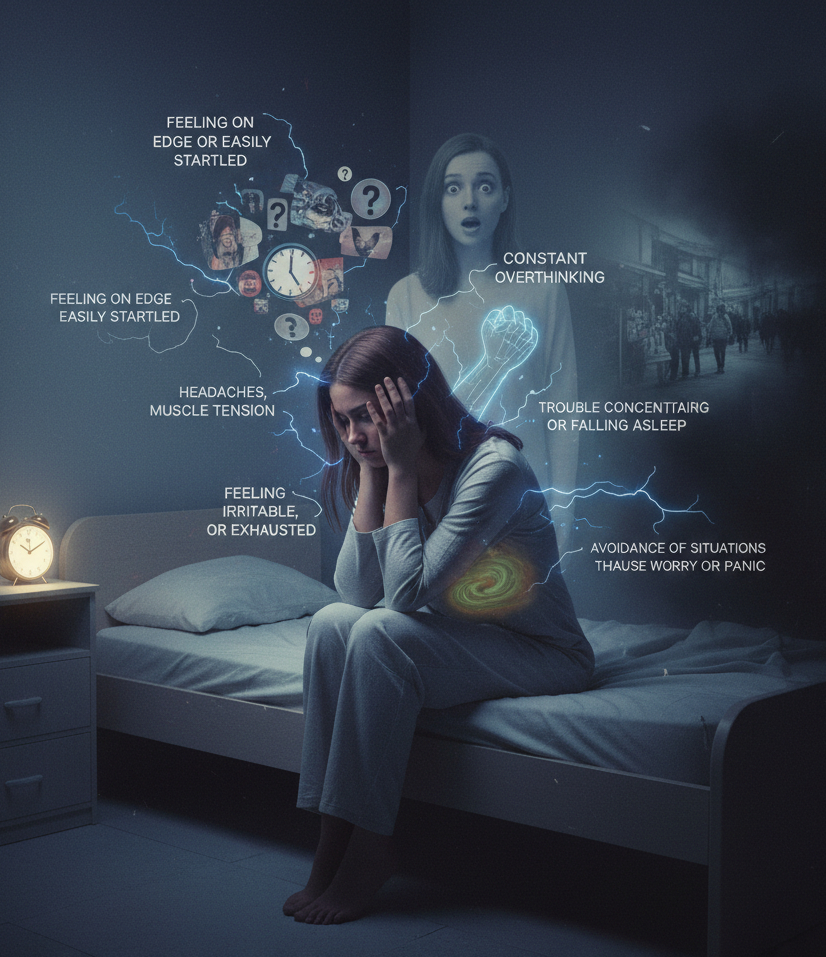
Recognizing the signs is the first step toward change. You may relate to one or more of the following:
Constant overthinking or rumination
Feeling on edge or easily startled
Difficulty relaxing, even in quiet moments
Headaches, digestive issues, or muscle tension
Avoidance of situations that cause worry or panic
Trouble concentrating or falling asleep
Feeling detached, irritable, or exhausted
If these symptoms sound familiar, you’re not alone. Anxiety affects millions of adults every year — but the way it shows up is unique to each person.
When your body is under pressure, your nervous system can stay stuck in “fight, flight, or freeze.” Over time, this survival mode makes it hard to distinguish real danger from daily stress.
Therapy helps identify those triggers and retrain your body’s response. It’s not about erasing anxiety — it’s about learning to understand it, manage it, and move through it instead of being controlled by it.
Evidence-based therapy for anxiety and stress focuses on building awareness and balance — not quick fixes.
You might work with approaches such as:
Cognitive Behavioral Therapy (CBT): Identify and challenge thought patterns that heighten anxiety.
Acceptance and Commitment Therapy (ACT): Learn to manage fear while focusing on what truly matters.
Mindfulness-Based Strategies: Build calm through breathing, grounding, and present-moment awareness.
Lifestyle Integration: Learn tools for sleep, movement, and daily habits that reduce stress at its root.
These tools teach you to notice your body’s signals earlier and respond with clarity instead of panic.


At Outside Therapy, every service begins with a clear plan and measurable goals.
We combine modern mental health science with whole-person care, drawing from modalities like:
ACT (Acceptance and Commitment Therapy) for mindset and motivation
CBT (Cognitive Behavioral Therapy) for thought and behavior change
DBT (Dialectical Behavior Therapy) for emotional balance
EMDR (Eye Movement Desensitization and Reprocessing) for trauma recovery
ERP (Exposure and Response Prevention) for OCD and anxiety disorders
Positive Psychology to promote purpose and resilience
We don’t do “forever therapy.” We do focused, intentional work that helps you reach a finish line and maintain your progress long after sessions end.